Performance Follows Identity: Why Who You Are Changes How You Perform
Identity influences performance because what people believe about themselves affects their confidence, decisions and behaviour. The same principle applies to organisations. A company's shared identity shapes how its people work, lead, collaborate and respond to challenges. When people understand who they are, what they stand for and what they're trying to achieve, they have a stronger foundation for purposeful action and performance.
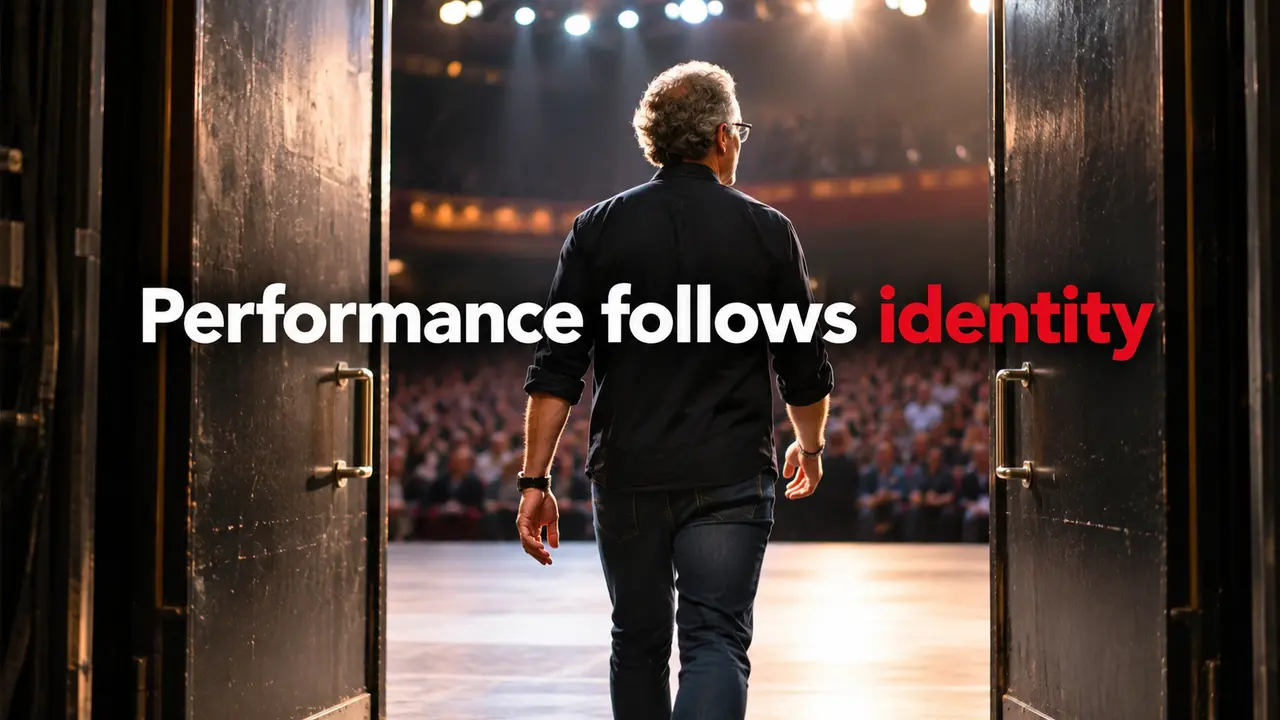
Who do you think you are?
It’s a question we don’t ask ourselves often enough.
Who are you?
What do you believe about yourself? What are you capable of? What do you stand for?
Because the answers to those questions influence practically everything you do.
A person who believes they’re capable approaches challenges differently from someone who doubts themselves.
A leader who sees themselves as courageous makes different decisions from one who’s terrified of stuffing up.
An organisation that genuinely believes in its people behaves differently from one that sees them as a cost to be managed.
Who you believe you are shapes how you behave. How you behave shapes what happens.
That’s why performance follows identity.

Every organisation has an identity. Whether it knows it or not.
When I start working with an organisation, I want to get under its skin.
I have what I call my red-wine-at-midnight conversations.
The conversations people have when the formalities disappear, the corporate bullshit stops, and they start telling you what they really think.
What excites them. What frustrates them. What they’re proud of. What they’re worried about. What they hope the business could become. And what they think is holding it back.
Those conversations tell me more about an organisation than a hundred PowerPoint presentations. Because somewhere in those conversations is the truth about who that organisation really is.
From there, we can start working out its purpose, vision, values and priorities.
And what all of that means for how people actually behave.

Change the identity. Change the behaviour.
Think about the difference between a team that sees itself as a group of employees doing their jobs and a team that believes it’s building something extraordinary.
Same people. Same skills. Same organisation.
A different sense of who they are and what they’re there to achieve.
That can change the energy, the conversations, the decisions and the effort people bring to their work.
Of course, leadership, systems and everyday experiences have to reinforce that identity. You can’t tell people they’re empowered and then punish them for taking initiative.
People need to experience the identity they’re being asked to believe in.
And leaders need to live it.
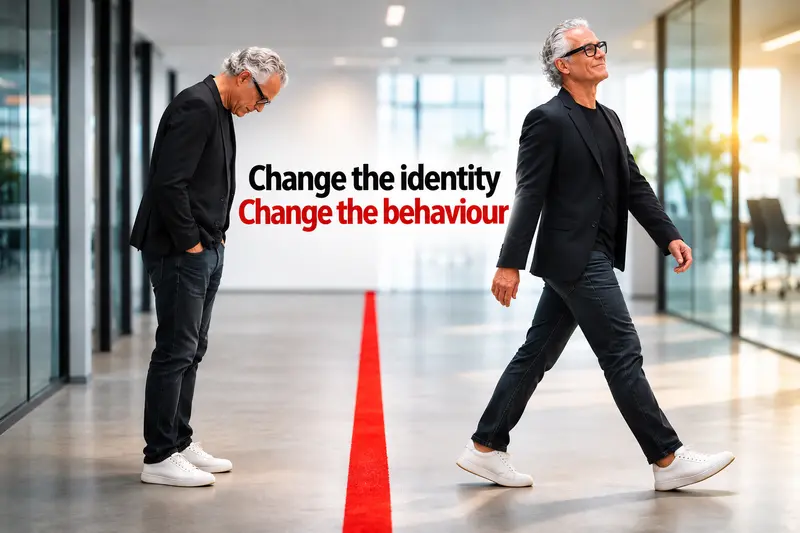
Performance follows identity.
Most organisations spend enormous amounts of time asking how to improve performance.
New strategies. New structures. New processes. New KPIs. All worth examining.
But there’s another question that deserves a place at the table.
Who do we believe we are?
And perhaps an even more revealing one.
Who are we actually being?
Because who you are influences what you do.
And what you do determines what happens.